
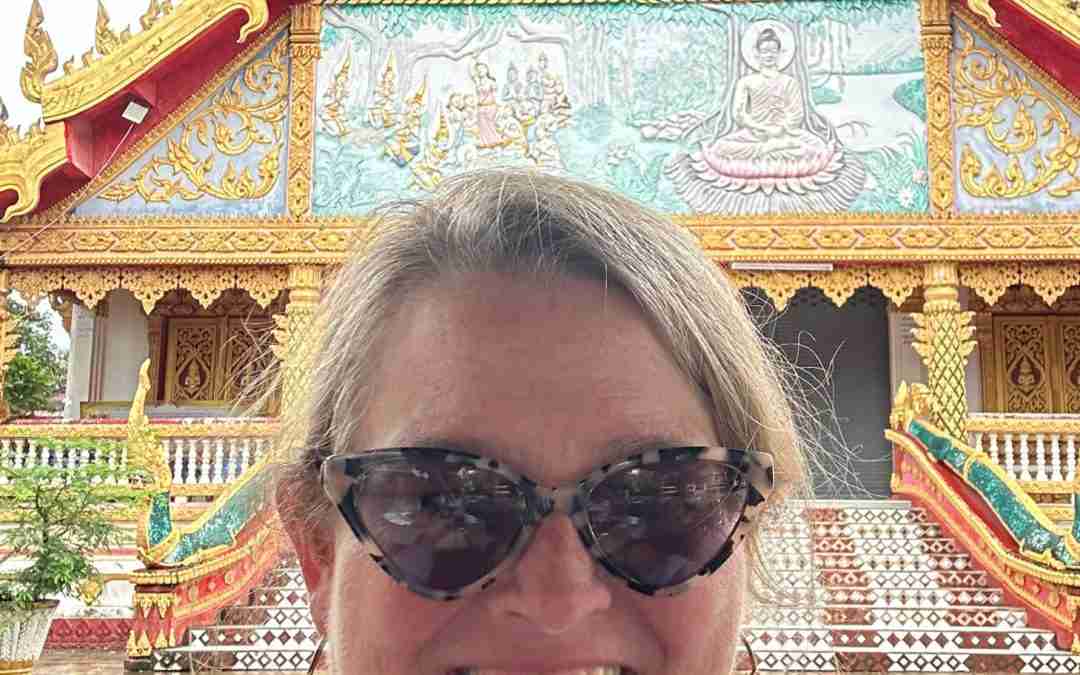
The Smile Doesn't Tell You Anything
I was in Bangkok a few weeks ago (I know, I can't stay away!).
It was so fun to catch up over dinner with friends each night, so many laughs, sharing crazy stories, and discussing the future of the sector.
One of the greatest gifts I've received from working in this sector is my diverse group of friends, from different countries and different cultures.
Having the kind of conversations where every viewpoint is different and you always learn something new.
One night, someone brought up my recovery article on LinkedIn.
"Tell me about it," they said, and there was some conversation around me always having a smile on my face. I shared that was normally my default, yet I was still struggling.
I sat with that for a second, because they're right. I do. At least in public. Not always at home, but out in the world, yes, I'm the person who's smiling.
I told them what I told everyone in the article. I tried to keep working. For a while I just couldn't, and then, without much warning, the energy came back.
That's not really the point though.
The point is that they looked at my Instagram, at pictures of me smiling in Japan, and assumed that was the whole story. Living my best life. And I was. That part is true. But underneath it, I was also in recovery, and neither of those things cancels the other out.
I don't post pictures of the bad days. Who does?
If the only data point you have on someone is a curated feed, you're not looking at their life. You're looking at the parts of it they let you see.
And this is where real friendship shows up. It's knowing when to ask "wait, actually, how are you" instead of taking the photo at face value. I'm lucky to have people who do that for me.
That conversation stayed with me. And then the article went out, and something happened that surprised me more than the comments themselves.
People didn't just comment publicly.
They messaged me privately, on WhatsApp, in my DMs, saying some version of "me too" or "oh my gosh, I thought it was just me." More people reached out privately than commented in public.
That tells me something. It tells me that a lot of people are smiling, natural or forced, while trying to hold it all together, even though they are exhausted and burned out.
I don't have a coaching a-ha moment to wrap this up with.
I just think we don't talk about this enough, so I'm going to keep talking about it.
I coach humanitarians and professionals in high-pressure environments, integrating ICF coaching with functional movement, because recovery happens in the mind and the body. Let's talk.
And if you're not ready to talk yet, start with The Mission Reset, the tools I used in Bangladesh to stay sane.
What do you want next?
Whether your answer is to set new boundaries or make a change, make sure your decision comes from a place of true clarity.
Download The Mission Reset for a 5-question audit and five daily well-being practices designed specifically for humanitarians and professionals in stressful environments.